 Biblical Prophecy
Written by Rev. Yen Van Vu · Published July 5, 2026
The book of Revelation can feel intimidating.
Its pages contain dragons, beasts, angels, seals, trumpets, bowls, cosmic conflict, and visions of judgment. Some readers avoid the book because it seems too difficult. Others approach it mainly as a secret code for predicting future events.
Yet Revelation was not written to confuse or frighten faithful Christians. It was written to reveal Jesus Christ, strengthen suffering believers, expose the false promises of worldly power, and assure the church that God will ultimately make all things new.
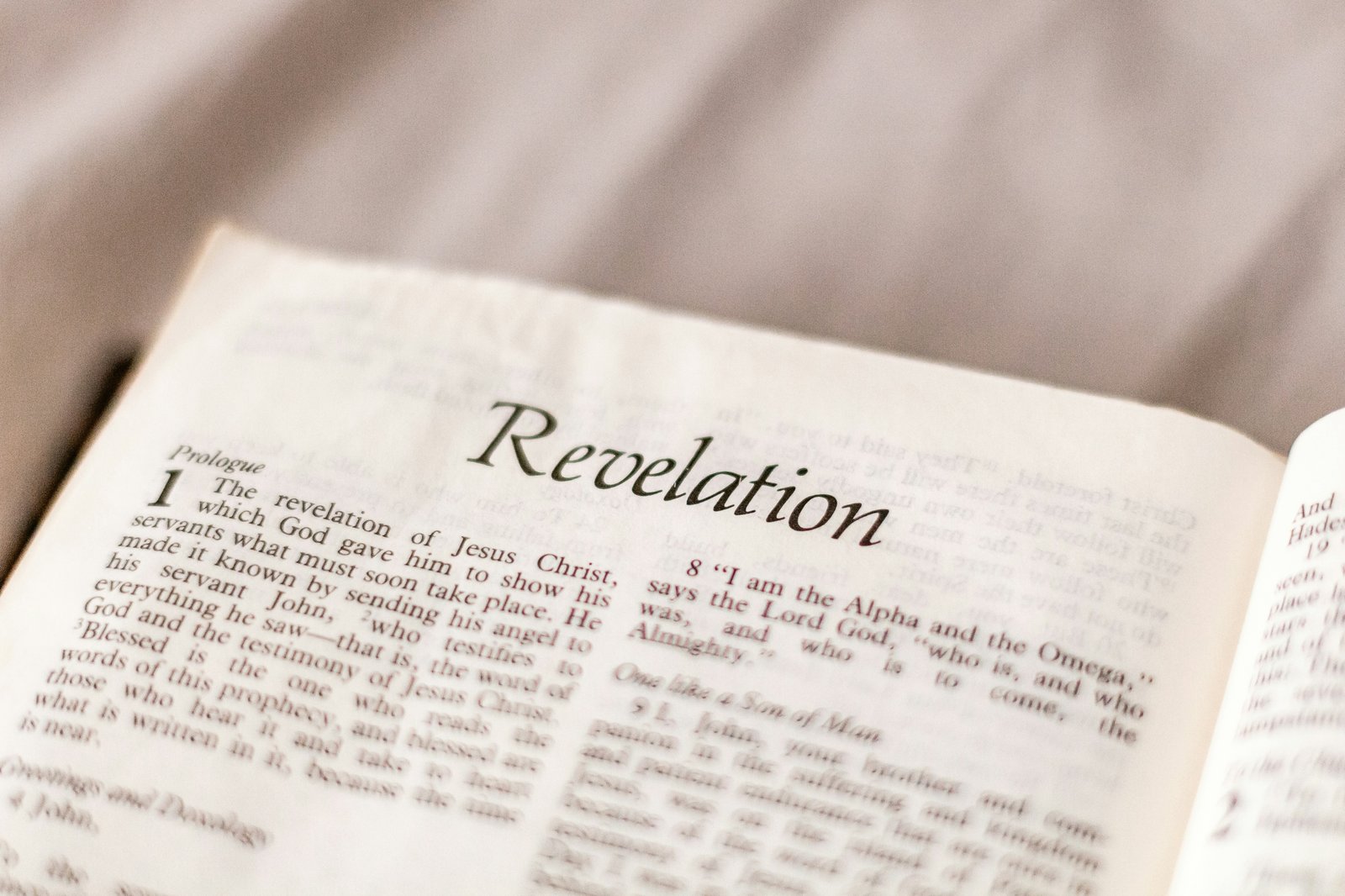
The opening words tell us what kind of book we are reading:
“The revelation of Jesus Christ, which God gave him to show to his servants the things that must soon take place.”
— Revelation 1:1
The word translated “revelation” comes from the Greek word apokalypsis, meaning an unveiling or disclosure. Revelation is not primarily a book of concealment. It is a book of unveiling. It reveals Jesus as the risen Lord, the faithful witness, the victorious Lamb, the righteous Judge, and the King who will reign forever. Understanding Revelation begins when we stop asking only, “What will happen at the end of the world?” and begin asking, “What does this book reveal about Jesus, faithfulness, worship, suffering, evil, and the hope of God’s kingdom?”
What Kind of Book Is Revelation?
Revelation belongs to three literary categories at the same time. It is an apocalypse, a prophecy, and a letter. Recognizing all three helps us read it more faithfully.
Revelation Is an Apocalypse
An apocalypse is a form of writing in which heavenly realities are revealed through visions, symbols, dreams, angels, and dramatic images. Apocalyptic literature was especially meaningful to people living under oppression. It allowed believers to see history from God’s perspective.
On the surface, Rome appeared powerful. Its emperors commanded armies, collected taxes, controlled trade, and demanded loyalty. But Revelation pulls back the curtain. Behind arrogant empires stands the deeper spiritual conflict between the kingdom of God and the forces of evil. The message is clear: earthly powers may look invincible, but they are temporary. God remains on the throne.
Apocalyptic imagery should not always be read as though it were a newspaper report written in advance. Symbols communicate theological truth through vivid pictures. For example, Revelation describes Jesus as a Lamb with seven horns and seven eyes. The vision is not meant to provide a physical description of Jesus. Horns commonly represent power, seven represents completeness, and eyes represent knowledge or perception. The image reveals that the slain Lamb possesses complete power and perfect knowledge.
Revelation Is a Prophecy
Revelation also calls itself a prophecy.
“Blessed is the one who reads aloud the words of this prophecy, and blessed are those who hear.”
— Revelation 1:3
Biblical prophecy is not limited to predicting future events. Prophets speak God’s truth into the present. They confront sin, call people to repentance, expose injustice, warn of judgment, and offer hope. Revelation does speak about the future, including the final defeat of evil, the resurrection, judgment, and the new creation. But its future hope is meant to transform how Christians live now. The book calls believers to resist compromise, remain faithful, reject idolatry, endure suffering, and worship God alone.
Revelation Is a Letter
Revelation was sent to seven actual churches in the Roman province of Asia, located in what is now western Turkey. These churches were in Ephesus, Smyrna, Pergamum, Thyatira, Sardis, Philadelphia, and Laodicea. Each church faced its own spiritual dangers. Some were suffering persecution. Some were tolerating false teaching. Some had become spiritually sleepy. Some were prosperous but lukewarm. Others were faithfully enduring despite weakness.
The letters addressed real congregations in the first century, yet their message continues to speak to churches today. When Jesus says, “He who has an ear, let him hear what the Spirit says to the churches,” the invitation extends beyond one congregation or historical period. Every generation of Christians must listen.
The Historical Setting of Revelation
According to Revelation 1:9, John received the visions while on the island of Patmos:
“I, John, your brother and partner in the tribulation and the kingdom and the patient endurance that are in Jesus, was on the island called Patmos.”
— Revelation 1:9
Patmos was a small island in the Aegean Sea. John appears to have been there because of his Christian testimony. Many scholars date Revelation near the end of the first century, during the reign of the Roman emperor Domitian, around AD 95. Others argue for an earlier date, possibly during or shortly after the reign of Nero.
Although the exact date is debated, the larger historical situation is clear. Christians lived under the shadow of Roman power. Rome promised peace, prosperity, protection, and order. Emperors were praised with titles that belonged properly to God. Citizens were expected to participate in public religious life, civic festivals, sacrifices, and practices connected with loyalty to the empire.
For Christians, this created serious pressure. Would they worship God alone, even when faithfulness cost them social acceptance, economic opportunity, or personal safety? Would they confess that Jesus is Lord when the empire demanded ultimate allegiance?
Not every Christian faced constant official persecution, but all believers lived in a world where political power, commerce, religion, and social life were deeply connected. Revelation teaches the churches how to recognize idolatrous power and remain faithful within it.
The Central Message of Revelation
The central message of Revelation can be summarized in one declaration: Jesus Christ has conquered, God remains sovereign, evil will be judged, and those who remain faithful will share in Christ’s victory.
This message is repeated throughout the book. Jesus has conquered not by imitating the violent powers of the world, but by laying down His life. He is the Lion who conquers as a slain Lamb.
In Revelation 5, John hears that the Lion of the tribe of Judah has conquered. But when he looks, he sees a Lamb standing as though it had been slain. This is one of the most important images in the book.
Jesus wins through sacrificial love, faithful obedience, suffering, death, and resurrection. His followers overcome in the same way:
“They have conquered him by the blood of the Lamb and by the word of their testimony, for they loved not their lives even unto death.”
— Revelation 12:11
The church does not defeat evil by becoming more like the beast. Christians conquer by remaining loyal to the Lamb.
A Simple Structure of Revelation
Revelation contains repeated cycles of visions rather than a simple, uninterrupted timeline. Some interpreters understand the visions as mostly chronological, while others see several sections revisiting the same period from different perspectives. A helpful broad outline is:
1. The Opening Vision of Jesus — Revelation 1
John sees the risen Christ walking among seven golden lampstands, which represent the churches. Jesus is not distant from His people. He stands among them, knows their condition, corrects their failures, and strengthens their faith.
2. The Letters to the Seven Churches — Revelation 2–3
Jesus addresses the strengths, sins, dangers, and opportunities of each church. The letters repeatedly call believers to conquer, not through worldly domination, but through repentance, endurance, truth, love, and faithfulness.
3. The Throne Room and the Lamb — Revelation 4–5
John is taken into heaven and sees God seated on the throne. This vision establishes the controlling truth of Revelation: God reigns.
The throne is not empty. History is not uncontrolled. The Lamb is worthy to open the scroll because He was slain and has redeemed a people for God.
4. The Seals, Trumpets, and Bowls — Revelation 6–16
These judgment cycles portray war, famine, suffering, persecution, cosmic disturbance, and divine judgment. They echo the plagues of Exodus and the warnings of the Old Testament prophets. The cycles increase in intensity and repeatedly call humanity to repentance. They reveal both the seriousness of rebellion and the justice of God.
5. The Defeat of Babylon — Revelation 17–19
Babylon represents the corrupt world system organized against God. For John’s first readers, Babylon would have strongly suggested Rome. Yet the symbol is larger than one city or empire. Babylon represents political arrogance, economic exploitation, luxury, violence, idolatry, and the seduction of power. God calls His people not to participate in Babylon’s sins.
6. The Final Defeat of Evil — Revelation 20
Satan, death, and all rebellious powers are finally judged. This chapter contains the vision of the millennium, which Christians interpret in different ways. Some expect a future earthly thousand-year reign of Christ. Others understand the millennium symbolically as Christ’s present reign or as a picture of the church’s vindication. Faithful Christians may disagree about the sequence while agreeing on the central truth: Christ will triumph completely over Satan, sin, and death.
7. The New Heaven and New Earth — Revelation 21–22
Revelation ends not with believers escaping creation, but with creation being renewed. The holy city descends from heaven. God dwells with His people. Death, mourning, crying, and pain are gone.
The Bible’s story ends with restored communion between God and humanity:
“Behold, the dwelling place of God is with man.”
— Revelation 21:3
The final hope of Christianity is not merely going to heaven when we die. It is resurrection life in God’s renewed creation.
How Symbols Work in Revelation
Revelation uses symbols because symbols can communicate layers of meaning with extraordinary power. Readers should avoid two opposite mistakes. The first is treating every symbol as a literal prediction. The second is assuming symbols have no real meaning. Symbols are not meaningless decorations. They reveal spiritual realities through biblical images.
Numbers
Numbers often carry symbolic significance. Seven commonly represents completeness or fullness. Revelation contains seven churches, seals, trumpets, bowls, and spirits before the throne.
Twelve is connected with the people of God, recalling the twelve tribes of Israel and the twelve apostles. Three and a half, expressed in forms such as forty-two months or 1,260 days, represents a limited period of suffering. It is half of seven, suggesting something incomplete and temporary.
The number 666 is associated with the beast. Many scholars connect it with Nero Caesar through an ancient numerical system, while the repeated six may also symbolize humanity repeatedly falling short of divine completeness. The point is not that every reader must solve a mathematical puzzle. The beast represents arrogant, counterfeit human power that sets itself against God.
The Dragon, the Beasts, and Babylon
The dragon is identified as Satan. The beast from the sea represents persecuting political power. It echoes the beasts of Daniel 7, where violent kingdoms rise and fall. The beast from the earth, later called the false prophet, represents deceptive religious or ideological power that persuades people to worship the first beast. Babylon represents a seductive economic and cultural system that grows wealthy through injustice, luxury, exploitation, and violence. Together, these images reveal how evil works through force, deception, false worship, and corrupt desire.
The Mark of the Beast
The mark of the beast is placed on the forehead or hand, symbolizing allegiance expressed through thought and action. It serves as a counterfeit to the seal of God placed upon His servants.
Throughout Scripture, the forehead and hand are associated with identity, loyalty, belief, and behavior. The central question is not merely whether someone has received a visible object. The deeper issue is: Whom do you worship, and to whom do you belong? Revelation describes two communities—those shaped by the beast and those who follow the Lamb.
The Lamb
The Lamb is the central symbol of Revelation. Jesus is called the Lamb repeatedly because His sacrificial death is the foundation of His victory. The world sees power in terms of domination. Revelation sees true power in the crucified and risen Christ. The Lamb is worthy because He was slain. His blood redeems people from every tribe, language, people, and nation.
Revelation’s Old Testament Foundations
Revelation contains hundreds of echoes and allusions to the Old Testament, even though it rarely introduces them with phrases such as “it is written.” A reader unfamiliar with the Old Testament may find Revelation strange. A reader who knows the Old Testament begins to recognize its language.
Daniel
Daniel provides much of Revelation’s imagery of beasts, kingdoms, persecution, heavenly judgment, and the Son of Man. The four beasts of Daniel 7 stand behind Revelation’s description of the beast from the sea. Daniel also helps explain the symbolic periods of suffering and the promise that God’s kingdom will outlast every earthly empire.
Ezekiel
Revelation draws heavily from Ezekiel’s visions. The throne room, living creatures, scroll, measuring of the temple, judgment scenes, resurrection imagery, river of life, and restored city all echo Ezekiel. Like Ezekiel, Revelation describes God’s glory, the judgment of corruption, and the restoration of God’s presence among His people.
Isaiah
Isaiah contributes images of the new creation, the fall of arrogant cities, universal worship, and the final removal of death. Revelation’s promise of a new heaven and new earth comes directly from Isaiah’s prophetic hope. The nations bringing their glory into the New Jerusalem also reflects Isaiah’s vision of the nations being drawn to God’s light.
Zechariah
The colored horses, lampstands, olive trees, measuring lines, and other visions in Revelation recall Zechariah. These images communicate divine judgment, prophetic witness, and God’s protection of His people.
Exodus
The plagues, Passover imagery, songs of deliverance, wilderness themes, and tabernacle language all connect Revelation with Exodus. Jesus is the true Passover Lamb. God delivers His people from spiritual slavery. The judgments upon the rebellious world echo the plagues upon Egypt. Revelation presents the final victory of God as a greater exodus.
Genesis
The final chapters of Revelation deliberately return to the beginning of the Bible. Genesis begins with creation, a garden, the tree of life, a river, and humanity dwelling in God’s presence. Sin brings exile, curse, pain, and death.
Revelation ends with a renewed creation, the tree of life, the river of life, the removal of the curse, and God dwelling with humanity forever. The Bible’s ending completes the story begun in Genesis.
Four Major Approaches to Interpreting Revelation
Christians have developed several approaches to Revelation.
The preterist approach emphasizes how the book addressed events and powers in the first-century Roman world. The historicist approach views Revelation as a symbolic outline of church history from the apostolic period to the end. The futurist approach understands much of Revelation 4–22 as describing events that will occur near Christ’s return. The idealist approach sees Revelation as portraying the recurring spiritual conflict between God’s kingdom and evil throughout the church age.
These approaches do not always have to be treated as completely exclusive. Revelation had a real message for first-century churches. It describes spiritual patterns repeated throughout history. It points toward the final return of Christ. And it calls every generation to faithful discipleship. A responsible interpretation begins with what Revelation meant to its first readers, then considers how its message applies throughout history and ultimately reaches its final fulfillment.
How to Read Revelation Wisely
Begin with Jesus, not speculation. The book is the revelation of Jesus Christ. Every interpretation should draw attention to His character, authority, sacrifice, justice, and victory.
Read Revelation with the Old Testament open beside you. Many difficult images become clearer when their biblical background is recognized. Pay attention to repeated contrasts: the Lamb and the beast, the seal of God and the mark of the beast, the New Jerusalem and Babylon, faithful witnesses and false prophets, worship of God and worship of worldly power.
Avoid building major doctrines from isolated images. Read each vision within the message of the whole book. Allow room for humility. Faithful Christians disagree about the millennium, tribulation, timing of events, and the relationship between different judgment cycles. The purpose of Revelation is not to produce pride in those who believe they have solved every detail. It is to produce faithful worship, courageous witness, patient endurance, and confident hope.
Why Revelation Still Matters
Revelation speaks powerfully to Christians living in every age. It reminds suffering believers that God sees them. It warns comfortable believers that prosperity can hide spiritual poverty.
It confronts churches that tolerate false teaching or compromise with the surrounding culture. It exposes the spiritual danger of nationalism, exploitation, greed, violence, and political idolatry. It teaches us that worship is never a minor issue. Every human life is shaped by what it treats as worthy.
Revelation also gives hope when evil seems strong. Empires rise and fall. Corrupt systems eventually collapse. Satan’s accusations will end. Death will not have the final word. The Lamb who was slain is alive.
The Final Invitation of Revelation
The final pages of Scripture contain both a promise and an invitation. Jesus promises:
“Surely I am coming soon.”
— Revelation 22:20
The church responds:
“Amen. Come, Lord Jesus!”
Revelation does not end by inviting Christians to calculate dates. It invites them to long for Christ, remain faithful, and offer the water of life to a thirsty world. Its final vision is not darkness, destruction, or fear. It is a city filled with God’s light.
There is no temple because God and the Lamb are its temple. There is no night. The river of life flows from the throne. The tree of life brings healing to the nations. God’s servants see His face. This is the destination toward which the entire biblical story is moving.
Understanding Revelation does not require mastering every disputed detail. It begins by receiving its central testimony: God reigns. Jesus has conquered. Faithfulness matters. Evil will end. Creation will be renewed. God will dwell with His people forever.
For Christians who feel discouraged, pressured, afraid, or spiritually weary, Revelation offers more than information about the future. It offers a vision of reality strong enough to sustain faith in the present. The throne is occupied. The Lamb is worthy. The kingdom is coming. And because Jesus Christ holds the beginning and the end, His people can remain faithful in everything that lies between.
Continue Exploring Revelation & Faithful Living
If you found this introduction helpful, explore these related resources:
Browse all articles on Revelation, biblical prophecy, and faithful living.
Build daily habits of Scripture, prayer, and discernment for uncertain times.
Help your household stand firm in Christ through Scripture and prayer.
A gentle guide for beginning your journey through Scripture.
Gentle encouragement delivered to your inbox.
Monthly faith-filled mail to encourage your walk with Christ.
Want gentle encouragement delivered to your inbox?
Get 7 Days of EncouragementA free devotional series to strengthen your heart with God's Word.