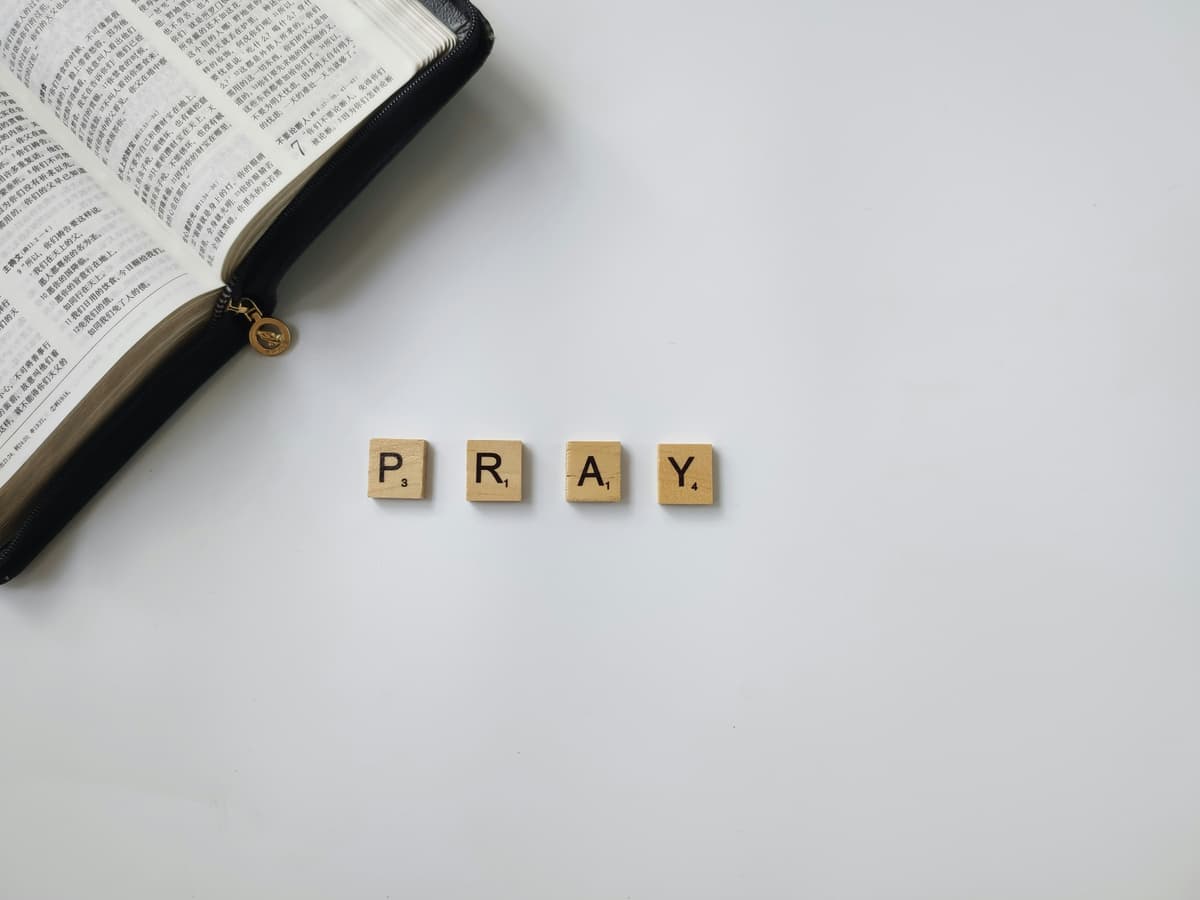
 Prayer & Hearing God
Written by Rev Yen V. Vu · Published April 4, 2026
The truest prayer is not the one with the most words, but the one that simply shows up. You have been there. You kneel beside your bed, or sit in the quiet of your car, or stare at the ceiling in the dark. Your mind is full—but your mouth is empty. You want to pray. You need to pray. But the words will not come. They feel stuck somewhere between your heart and your throat, tangled in exhaustion, confusion, or pain.
Maybe you think, If I cannot find the right words, maybe I should not pray at all. Maybe you feel guilty, like your silence is a failure of faith. Let me tell you something that might change everything: you do not need to know what to say. How to pray when you do not know what to say begins with understanding that prayer was never about your eloquence. It was never about your vocabulary or your theological precision. Prayer is, at its core, a relationship—and relationships do not depend on perfect words. They depend on presence.
For more prayer resources, explore our Bible study hub.
How to Pray When You Don’t Know What to Say: Why This Matters Now
We live in a culture that prizes productivity and performance. Even in our spiritual lives, we can fall into the trap of believing that doing it right means doing it well. We measure prayer by how long we prayed, how many topics we covered, or how emotionally moved we felt afterward. When we cannot meet those invisible standards, we feel like we have failed.
This is not a new problem. The disciples, who walked with Jesus every day, still asked Him, “Lord, teach us to pray” (Luke 11:1). They did not ask because they did not know how to pray—they were Jewish men who had prayed their whole lives. They asked because they sensed something was missing. They saw that Jesus prayed differently. His prayers were intimate, raw, and connected.
You want that too. You want prayer to feel real, not robotic. You want to know that when you are too tired to form a sentence, God still hears you. You want permission to come as you are—messy, quiet, and uncertain. That permission is already yours.
The Problem with “Right” Words
We often think of prayer as a conversation, but we forget that conversations are not always verbal. A husband and wife can sit in silence and still feel connected. A parent can hold a crying child without saying a word. Love does not require language to be real.
Consider Hannah in 1 Samuel. She was deeply distressed, weeping bitterly before the Lord. The text says, “She spoke in her heart. Only her lips moved, but her voice was not heard” (1 Samuel 1:13, WEB). The priest Eli thought she was drunk. But God heard her. He did not need her to project. He did not need her to find the perfect phrase. He heard the cry of her heart.
The problem is not that we do not know what to say. The problem is that we think we need to say something impressive. We have turned prayer into a performance when it was always meant to be a surrender. If you have ever felt like your prayers are inadequate, you are in good company. Every saint who ever lived has felt that way. The difference is that they kept showing up anyway.
The Holy Spirit Prays for You
This is the most freeing truth in all of Scripture about prayer: you are not alone in it.
“In the same way, the Spirit also helps our weaknesses, for we do not know how to pray as we ought. But the Spirit himself makes intercession for us with groanings which cannot be uttered. He who searches the hearts knows what is on the Spirit’s mind, because he makes intercession for the saints according to God.”
Read that again. Paul does not say, “If you pray hard enough, you will figure it out.” He says, “We do not know how to pray as we ought.” That is not a failure—it is a reality. And God has already made provision for it. The Holy Spirit Himself takes your wordless groans, your silent tears, your confused sighs, and translates them into prayers that are perfect before the Father.
This changes everything. It means that your quietest, most broken prayer is still a prayer. It means that sitting in silence before God is not a waste of time. It means that when you whisper, “Jesus, I do not know what to say,” that is itself a prayer.
Praying the Scriptures
When your own words fail, you can borrow God’s words. This is one of the oldest and most powerful practices in Christian history: praying Scripture back to God.
The Psalms are especially helpful here. They cover the full range of human emotion. Are you angry? Pray Psalm 13: “How long, Yahweh? Will you forget me forever?” (WEB). Are you afraid? Pray Psalm 23. Are you joyful? Pray Psalm 100. Are you repentant? Pray Psalm 51.
You do not have to invent new words. You can take the words God has already given you and make them your own. Read a psalm slowly, phrase by phrase. Pause after each line. Let it become your prayer. When you do not know what to say, open your Bible. Let the Spirit use the Word to give you words.
Prayer as Presence, Not Performance
What if prayer is not primarily about speaking at all? What if it is about being present with God?
Think about the closest relationship in your life. Do you always need to talk? No. Sometimes you just sit together. You share a meal without deep conversation. You are in the same room, doing different things, and yet you feel connected. That is presence.
“Be still, and know that I am God.”
This is especially helpful when you are exhausted or overwhelmed. In those moments, the most faithful thing you can do is to simply show up and be present. Sit in a chair. Light a candle. Open your hands. Say, “I am here, Lord. That is all I have.” And trust that He receives that.
Counter-Argument
Some might argue that prayer requires specificity. After all, Jesus taught us to ask for daily bread, to forgive specific debts, to pray for specific needs. Does not that mean we need to articulate what we want?
Yes, Scripture does encourage specific prayer. There is value in naming your needs, confessing your sins, and interceding for others. But specificity is not the same as eloquence. You can be specific with very few words. “Lord, help my marriage” is specific. “Lord, I am scared about my health” is specific.
The danger is when we let the ideal of “specific prayer” become a burden. God knows your heart. He knows what you need before you ask (Matthew 6:8). Your job is not to inform God; your job is to connect with Him. A simple “Help” is a complete prayer. A whispered “Jesus” is enough.
Biblical-Theological Anchor
Three key passages give us confidence to pray without words.
Exodus 2:23-25 — God Hears the Groan
“The children of Israel sighed because of the bondage, and they cried, and their cry came up to God because of the bondage. God heard their groaning, and God remembered his covenant.”
They sighed. They groaned. They did not form a polished petition. And God heard. He did not say, “Be more specific.” He heard their groaning and responded. Your groans are prayers. Your sighs are heard.
Romans 8:26-27 — The Spirit Intercedes
The word for “groanings” here is the same root used for childbirth—a deep, wordless, bodily cry. The Spirit takes your deepest, most inarticulate longings and presents them to the Father. You do not need to translate your pain into perfect theology. The Spirit does that work for you.
Matthew 6:7-8 — Do Not Babble
“In praying, do not use vain repetitions, as the Gentiles do; for they think that they will be heard for their much speaking. Therefore do not be like them, for your Father knows what things you need before you ask him.”
This is a direct command to stop trying to impress God with wordiness. He already knows. He already sees. Prayer is not about information delivery; it is about relationship.
Key Takeaways
- You do not need to have perfect words to pray. God hears your heart, not your vocabulary.
- The Holy Spirit intercedes for you when you cannot find words (Romans 8:26-27).
- Praying Scripture, especially the Psalms, can give you language when your own words fail.
- Prayer can be silent presence with God, not just verbal conversation.
- God hears groans, sighs, and simple cries. He is not impressed by eloquence.
- Showing up is the most important part of prayer.
Conclusion
So what do you do when you do not know what to say? You show up anyway. You kneel. You sit. You lie face-down on the floor. You open your hands. You whisper, “I am here.” And you trust that the Spirit is praying through you, that the Father is listening, and that Jesus has already made a way.
You do not need to fix your heart before you pray. You do not need to find the right words. You do not need to feel spiritual. You just need to come. And when you come, you will find that God was already waiting. He was not waiting for your words. He was waiting for you.
For more resources on prayer, visit our homepage.